Humans Didn't Evolve to Drink Calories
Humans have existed as a distinct species for roughly 315,000 years, and for all but a fraction of that time, we drank just one liquid after weaning: water. Boring, flat, calorie-free, water – with any flavor and texture coming from sediments, bacteria, or excrement.
Now, faced with a sudden explosion of calorically-dense beverages in the evolutionary blink of an eye, our bodies are outmatched. Put simply, we are not meant to drink our calories, and it shows in elevated rates of obesity around the world.
Humans started drinking the equivalent of very, very light beer 13,000 years ago. And we may have consumed milk from livestock as many as 20,000 years ago. But this isn't very long on an evolutionary timescale. Our naïveté´ with beverages is apparent in our physiology today.
"Fluid calories do not hold strong satiety properties, don't suppress hunger, and don't elicit compensatory dietary responses," Richard D. Mattes, a professor of food and nutrition at Purdue University, told the Washington Post.
Any fluids that we drink rapidly enter our small intestine. The quick trip through our gastrointestinal system avoids triggering peptide hormones that quell hunger.
"That response helped ensure that water intake by early humans would not blunt the desire to eat simply because they had recently satisfied their thirst," a team of public health researchers explained in a 2007 paper.
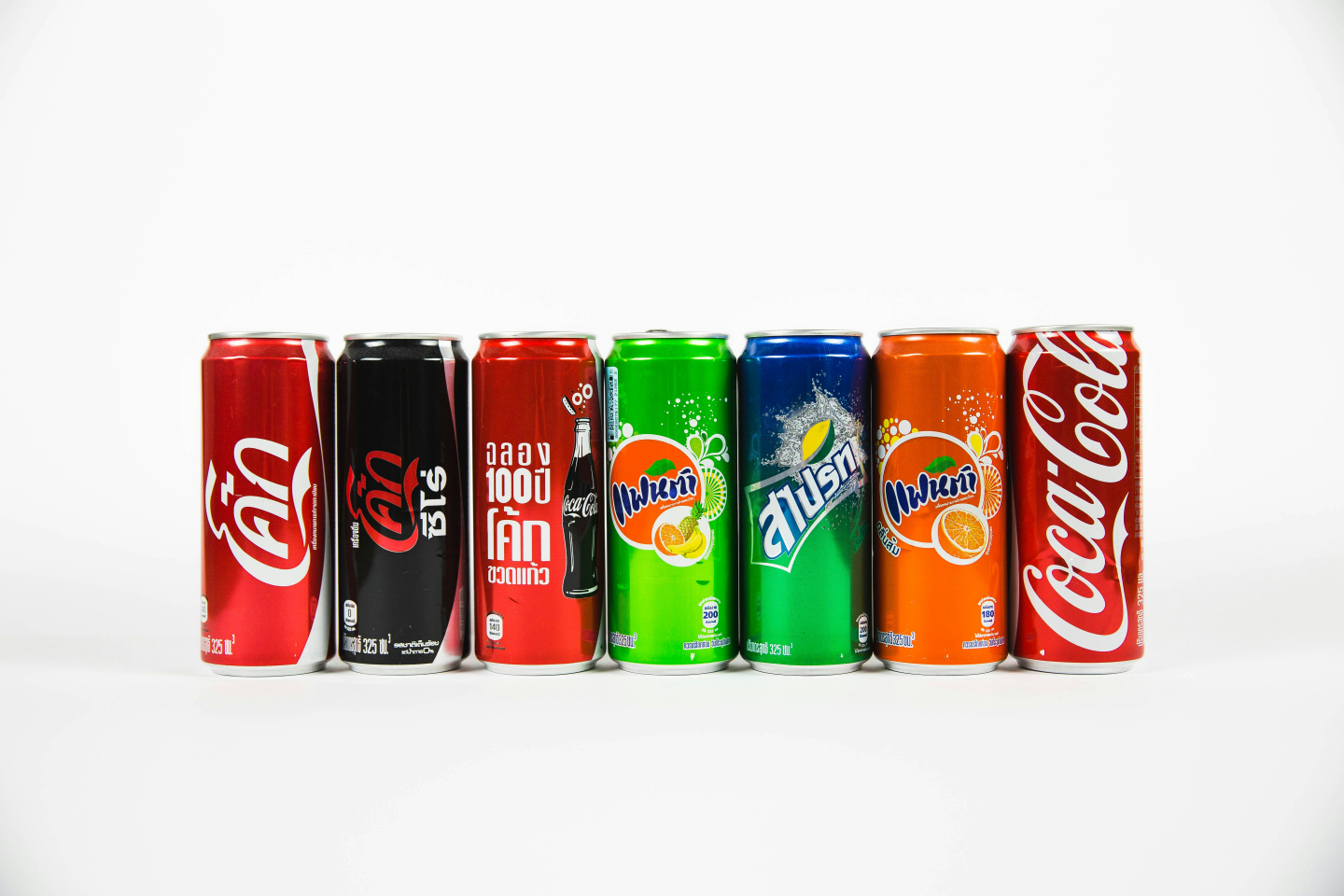
Mattes showcased this bodily quirk back in the year 2000 with a cheeky study that would appeal to any sweet lover. For four weeks, two small groups of subjects either consumed 450 calories of jelly beans or 450 calories of caffeine-free soda. They could eat freely otherwise and were instructed to track their calorie consumption. The subjects were then given a four week break before resuming the experiment, this time assigned to eat the sweet they didn't consume the first time around.
Mattes and his co-author found that when participants consumed jelly beans, they felt more satiated. This caused them to reduced their food intake throughout the day by slightly more than the candies' 450 calories. They essentially compensated for the extra sweet treat by eating less. On the other hand, when participants drank soft drinks, they failed to reduce their caloric consumption to compensate, and actually ate slightly more of everything else.
Studies have revealed the negative effects of sugary beverage consumption over the long term. One followed more than 50,000 women over eight years. The authors found that those who increased their intake of sugar-sweetened beverages from one per week to one or more per day consumed an average of 358 extra calories per day and gained a significant amount of weight. On the other hand, women who cut their sweetened beverage consumption ate 319 fewer calories each day, and the reduction showed in their body weight.
Why haven't humans evolved to correct the glaring shortcoming in the body's ability to handle sugary beverages? Well, there's no reason to. Humans who gulp down twenty-ounce sodas, Mocha Cookie Crumble Frappucinos from Starbucks, and purportedly healthy (but not really) juice smoothies still live long enough to pass on their genes. Medications and other interventions help us live with the myriad health conditions that sugary drinks cause.
"Beverages appeared in the human diet at the point in human evolution when selective pressure dramatically abated – just as the domestication of livestock and agricultural production reduced the risk of starvation," the public health researchers wrote.
So it's up to us to consciously cut our consumption if we want to live healthier lives. Americans may actually be following this dietary advice. Soft drink consumption peaked in 1999 at roughly 50 gallons per person per year. It's now around 40 gallons and steadily falling.