Your Mouth Has Super-Healing Abilities

Your mouth has remarkable regenerative powers. A wound to your oral mucosa – the lining of the inside of your mouth – heals three to four times faster than an identical cut on your skin, with less likelihood of leaving a scar. Figuring out why could enable doctors to speed-up wound healing everywhere.
In a new review published to the journal Biomolecules, a team of researchers from various institutions in the Netherlands dug in to the published research on the topic, seeking to gain and provide a "bigger picture" understanding.
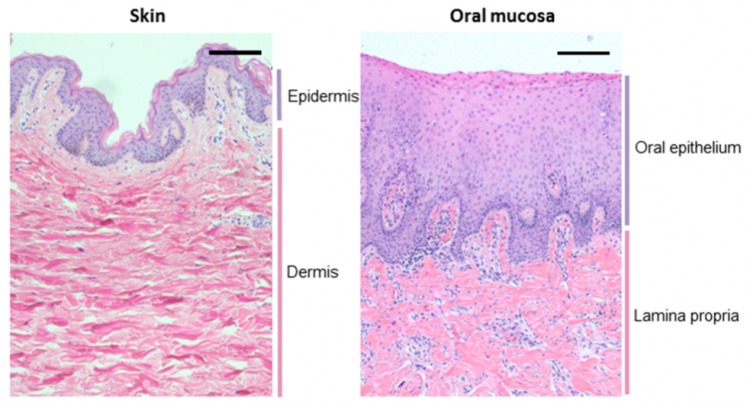
For starters, they noted that the structures of the external skin and oral mucosa are noticeably different. Chiefly, the oral mucosa is much thicker, with a slightly looser structure enabling it to bend more easily, and it has more blood vessels. Additional blood flow could certainly factor in to speedier healing.
Wound healing is divided into four phases: hemostasis, inflammation, proliferation, and tissue remodeling. And the oral mucosa seems to be more efficient at all of them.
Hemostasis is the process to stop bleeding, involving coagulation, in which blood is transformed from a liquid to a gel. Here, saliva seems to help, as it is full of a protein called tissue factor, which is key to the blood clotting process.
Inflammation is next, which is "is aimed at removing debris from the injured site and prevent infection by pathogens," the authors described. Studies show that immune cells like neutrophils, macrophages, and T-cells build up quickly in oral mucosa then leave just a fast, while their arrival and departure are comparatively delayed in skin cells. The rapid and robust arrival of blood clotting cells called platelets in the mouth seems to trigger a large and speedy release of signaling proteins called chemokines, which trigger the waterfall of immune cells.
In the ensuing healing phase, called proliferation, endothelial cells, fibroblasts, and epithelial cells – all of which either comprise or repair skin – migrate into the wound bed to regenerate the tissue. Here, the warm, moist, saliva-filled environment of the mouth seems to speed things along. Scabs do not form in the mouth, unlike on the skin, and so protein-rich saliva and even friendly oral microbes appear to aid in the healing process.
Finally, in the remodeling phase of healing, immune cells send out small proteins called cytokines that reduce inflammation around the wound. Again, this process of reducing inflation occurs faster in the mouth compared to the skin. Then, over days, weeks, or months, fibroblasts and myofibroblasts get to work remodeling the structure that supports surrounding cells, called the extracellular matrix. Studies suggest that when this occurs in the presence of inflammation, scars are more likely to form (which explains why picking scabs, thus inflaming the tissue, leads to increased scarring).
"It can be concluded that faster wound closure, the presence of saliva, a more rapid immune response, and increased extracellular matrix remodeling all contribute to the superior wound healing and reduced scar formation in oral mucosa, compared to skin," the authors summarized.
Overall, the mouth is just a great place for healing to occur. Products that simulate its conditions for skin wounds could greatly improve healing.